Wednesday, March 10, 2010

Recognize.

The best trailer I've seen in a while.


Color me excited. Tron Legacy hits theaters in December.

Tuesday, March 9, 2010

Anthological.

Did I mention I'm getting ready to direct another feature? Well, at least part of a feature.


My good pal Arik Sokol is putting together a horror/science fiction anthology movie. It will consist of five short films by five different directors, including Chuck Hartsell (co-director of Hide and Creep, star of Interplanetary), Robb Rugan (director of Alice's Misadventures in Wonderland, DP of Hide and Creep), and Mike Harring (director of The Mountain, the River, and the Road). And me.

After Interplanetary, I'm looking forward to tackling something a little more... well, simple. Not that a movie with five directors will be simple. But I'm hoping to have my piece of it shot by mid-April. (Yes, mid-April of 2010.)

Monday, March 8, 2010

Just when you thought it was safe to go back to Mars...

...Interplanetary is coming back to the big screen. The good folks at Sidewalk will be showing the movie on Tuesday April 13 at the Virginia Samford Theatre in Birmingham, Alabama.


That's all I know at the moment. More details when I get 'em.

Thursday, March 4, 2010

Five-digit ISO.

Quick primer for any readers who are not camera nerds: A particular filmstock's light sensitivity, or "speed," is referred to as "ISO." The more sensitive the stock, the higher the ISO number. The fastest motion picture filmstock available these days (last I checked, anyway) is ISO 500.

The Canon 7D's CMOS chip (which takes the place of film in this particular camera) has a user-adjustable ISO. It goes from 100 (fairly slow, requires a good bit of light) to 12,800 (ridiculously fast).

This increased light sensitivity comes at a price. In the film world, an image captured on a faster stock is grainier than one captured on a slower stock. In the digital world, faster chip settings lead to noisier images. So, to capture the cleanest image, more light is usually better. I say "usually" because there is such a thing as too much light. But that's a different discussion.

I mention all this because I shot a little bit of ISO 12,800 footage for Monster Hunt. It's noisy as hell, but still more detailed than what I was seeing with my naked eye. Here's a grab:


I'd say all that chroma noise makes this shot pretty much unusable. However, if you were shooting some low-light stuff with the intent on finishing in black and white...


...that might be kind of cool. It's cool enough that I'm interested in doing some more ISO 12,800 experiments at some point.

If you want to see video of the above examples, check it out on Vimeo.

And speaking of low-light shooting, I hope Noktor comes out with a Canon mount version of their f/0.95 50mm lens. That's some awesome glass for 750 bucks.

Wednesday, March 3, 2010

Operator error.

Looking through some of my 7D footage, I started to notice missing detail in the shadows in Final Cut Pro (my editing software of choice). However, Apple's Color software seemed to have no problem with that detail. Here are a couple of examples, with the black levels boosted to make the point more obvious.

Final Cut Pro...


Color...


Yeah, it's subtle. (Depending on your computer and monitor, it might be imperceptible.) But I shot several Monster Hunt bits in very low light, knowing I'd have to push the footage in post. So I need all the shadow detail I can get.

I did some research and finally found some info regarding my issue at DVInfo.net. David Newman explains...

"Canon selected to place black and white [at] YUV Luma level 0 and 255, rather than the far more common 16 and 235. Many NLEs handle the extended range poorly and clip off the supers, so much so, originally the Canon cameras where thought to be very contrasty (there were many reports of this.) Later there was a patch to Quicktime that addressed this..."

(You can read the whole thread here.)

A patch to QuickTime, huh? Yeah, I guess I haven't ran any software updates since... aw, heck, since I don't know when.

Short story long, I updated QuickTime, the "Pro" apps (including Final Cut), and anything else that looked like it might affect video playback on the MacBook Pro. And now my 7D footage has a lot more latitude than it did yesterday.

Tuesday, March 2, 2010

Viva la Revolución?

I've been hearing about the "digital revolution," the idea that digital technology makes it cheaper and easier to create good-looking movies, for years. And for years, I've been a skeptic. Some high-def video cameras that produce a very film-like image have made it to market, but they ain't cheap. According to my calculations, I was getting more bang for the buck shooting my "serious" projects on 16mm film, so I stayed that course.

Late last year, I started reading about the Canon 7D, a digital SLR camera with video capability. Then I watched some footage shot with the 7D. It looked pretty damn good. Good enough that I threw my skepticism to the wind and bought a 7D for myself.
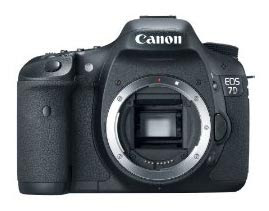

I've been impressed so far. I don't love the 7D like I love my Aaton LTR-54 16mm camera. But I do love the fact that I can shoot for hours with the 7D without spending a dime. It records video to reusable compact flash cards. When you fill up a card, you just copy the footage to your computer, wipe the card, and get back to shooting. With 16mm film, I'm probably dropping 400 or 500 bucks for every ten minutes of footage I shoot.

The 7D is far from a perfect camera. The ergonomics suck. It eats through batteries. Its images suffer from aliasing and rolling shutter issues. But there are workarounds for these problems.

And I can live with workarounds for a camera that set me back less than $2,000.

The low cost-of-use is encouraging me to do less planning and more shooting. Since buying the camera, I've shot a short snow documentary, a web ad for a local restaurant, three commercials for an upcoming television show, and that Monster Hunt thing I keep mentioning but never quite explaining. And I'm hoping to shoot a more ambitious short film with the camera later this month. And I'm really looking forward to shooting an inexpensive (but good-looking) feature with the 7D, possibly as soon as this summer. Exciting (and busy) times.

As happy as I am with the 7D, Canon's new Rebel T2i might be even cooler. From what I've seen, it creates 7D-quality video at half the price. You can read more about the Rebel and see a sample video at Stu Maschwitz's excellent ProLost blog.

Monday, March 1, 2010

Shorts.

We wrapped Monster Hunt with James and Kevin on Saturday.* Here's a frame grab...


Worked late last night finishing up the second draft of the screenplay for another short movie. More on that later this week.

*Except for the inevitable pickup shots, of course.